
GHK-Cu Benefits: Skin, Collagen, Hair Growth & Anti-Aging
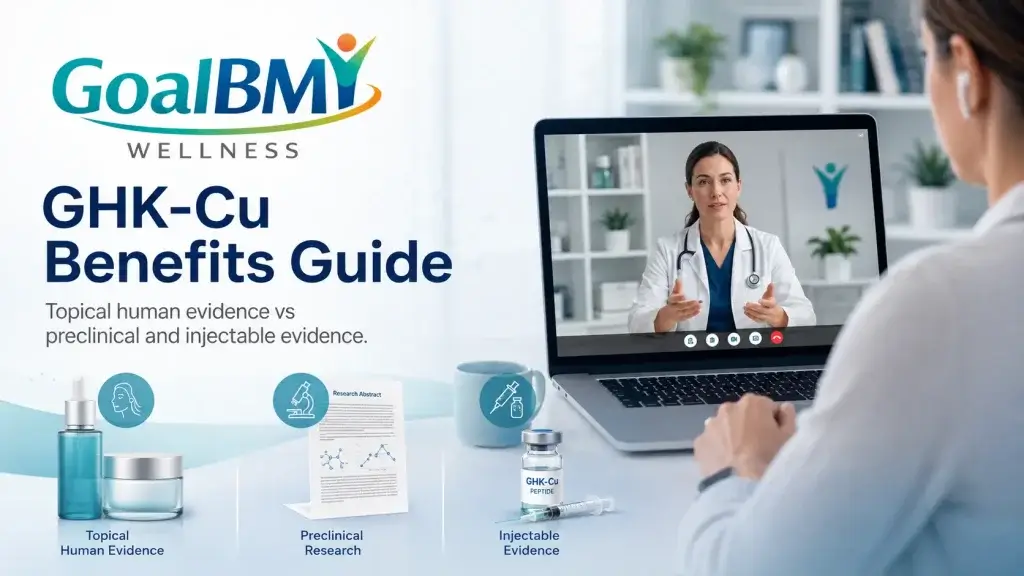
GHK-Cu Benefits: Skin, Collagen, Hair & What the Research Really Shows
GHK-Cu is a copper-binding peptide best known for its possible effects on skin quality, collagen, hair, and normal repair processes. Most of the research is laboratory or animal research. Human evidence is smaller, especially for injectable GHK-Cu.
Quick answer: If you are interested in GHK-Cu for skin, hair, or recovery, the most important thing to know is that the evidence depends on how it is used. Topical copper peptides have more human cosmetic experience. Injectable GHK-Cu has much less human safety and benefit data.
Important: There is no FDA-approved GHK-Cu drug product for skin rejuvenation, hair growth, recovery, or anti-aging. Injectable GHK-Cu has limited human safety and benefit information.
What Is GHK-Cu?
GHK-Cu stands for glycyl-L-histidyl-L-lysine bound to copper. It is a small peptide found naturally in the body. In skincare, you may see it listed as Copper Tripeptide-1.
Researchers are interested in GHK-Cu because it is involved in processes connected with collagen, skin structure, inflammation, blood-vessel formation, and normal tissue repair.
What GHK-Cu Benefits Are People Usually Looking For?
Skin & Collagen
Smoother texture, firmer-looking skin, fine lines, elasticity, and overall skin quality.
Hair & Scalp
Hair quality, thinning, shedding, and scalp support are common reasons people ask about copper peptides.
Skin Recovery
Some people are interested in GHK-Cu after skin stress or cosmetic procedures because of its repair-related research.
Healthy-Aging Goals
Most useful conversations focus on a specific goal such as skin texture or hair quality rather than broad “age reversal” claims.
What people report: some describe smoother-looking skin, better texture, firmer appearance, healthier-looking hair, or improved skin recovery. Others notice only small changes or no clear benefit. Personal experiences cannot predict your result.

What Does the Research Say About Skin, Collagen and Hair?
Skin and collagen
This is where GHK-Cu has the strongest research story. Laboratory research shows effects on fibroblasts and parts of the skin matrix involved in collagen, elastin, and skin structure.
Human research is much smaller. Some topical cosmetic studies have reported changes in skin density, thickness, fine lines, or appearance, but results are not strong enough to promise wrinkle removal or dramatic skin tightening.
Hair and scalp
GHK-Cu has also been studied around hair follicles and the tissues that support them. However, strong human evidence for GHK-Cu alone as a hair-loss treatment is lacking.
If you have noticeable thinning or shedding, it is important to look for other possible causes rather than assuming a peptide is the answer.
Topical vs. Injectable GHK-Cu
Topical GHK-Cu has more cosmetic use history and some human skin research. Injectable GHK-Cu has much less human benefit and safety information.
How Strong Is the Evidence for GHK-Cu Benefits?
| Goal | What We Know |
|---|---|
| Skin & collagen biology | Strong laboratory and preclinical interest, with some limited human topical research. |
| Wrinkles & visible skin quality | Some encouraging topical findings, but human evidence is limited and mixed. |
| Hair growth | Interesting biology, but strong human evidence for GHK-Cu alone is lacking. |
| Injectable repair or anti-aging | Much less established in controlled human research. |
How Long Does GHK-Cu Take to Work?
There is no single evidence-based timeline. Topical cosmetic studies often look at changes over several weeks or months, but those timelines should not be applied directly to injectable treatment.
A better approach is to decide what you are trying to improve before treatment, then compare that same outcome at follow-up.
Is GHK-Cu Right for Me?
A useful consultation should focus on your specific goal and your health history, not on whether GHK-Cu is “good” in general.
If Your Goal Is Skin
Be specific: texture, firmness, fine lines, post-procedure recovery, or another concern.
If Your Goal Is Hair
Hair loss can have hormonal, nutritional, genetic, autoimmune, medication-related, and other causes.
If You Have a Copper-Related Condition
Because GHK-Cu contains copper, known copper-handling disorders or abnormal copper studies should be reviewed with a provider.
If You Are Pregnant or Breastfeeding
Adequate therapeutic safety information is not available for these situations.
What Happens During a GoalBMI Consultation?
Tell Us What You Want to Improve
We start with your actual goal—skin, hair, recovery, or another specific concern.
Review Your Health History
Your provider reviews medical conditions, medications, supplements, allergies, and current skin or hair treatments.
Discuss the Evidence and Alternatives
We explain what is known, where the evidence is limited, and whether another option may fit your goal better.
Create a Plan If Appropriate
If treatment makes sense, your provider discusses formulation, sourcing, monitoring, follow-up, and what would count as a meaningful result.
GHK-Cu Benefits: Common Patient Questions
What are the main GHK-Cu benefits people ask about?
Most questions are about skin quality, collagen, fine lines, hair and scalp health, and normal repair biology. Human evidence is strongest for topical skin-related use, but it is still limited.
Does GHK-Cu increase collagen?
Laboratory and preclinical research supports effects on fibroblasts and collagen-related signaling. That does not mean every product or route has been clinically proven to create a visible collagen benefit.
Can GHK-Cu help wrinkles or fine lines?
Some topical cosmetic studies are encouraging, but the human clinical evidence is limited and mixed. Results should not be guaranteed.
Does GHK-Cu help hair growth?
GHK-Cu has interesting hair-follicle biology, but strong human evidence for GHK-Cu alone as a hair-growth treatment is lacking.
Is topical GHK-Cu the same as injectable GHK-Cu?
No. Topical products have more cosmetic use history and some human skin research. Injectable GHK-Cu has much less human benefit and safety information.
How long does GHK-Cu take to work?
There is no universal timeline. Topical studies often evaluate results over several weeks or months, but those timelines should not be applied directly to injectable use.
Is GHK-Cu FDA-approved?
No. There is no FDA-approved GHK-Cu drug product for skin rejuvenation, hair growth, recovery, or anti-aging.
Is injectable GHK-Cu safe?
A comprehensive human injectable safety profile has not been established. Human safety information is limited, so formulation, sourcing, and provider follow-up matter.
More GHK-Cu Guides

Interested in GHK-Cu? Talk With a Provider
Tell us what you want to improve. A GoalBMI Wellness provider can review your health history, current treatments, and questions about topical versus injectable GHK-Cu, then help you decide whether it makes sense for you.
Book Online Consultation Call GoalBMI Wellness




-
Monday – Friday:: 9:00 AM – 8:00 PMSaturday:: 9:00 AM – 4:00 PMSunday:: 12:00 PM – 8:00 PM