GHK-Cu Side Effects: Skin Reactions, Injection Risks, Copper Uglies & Safety
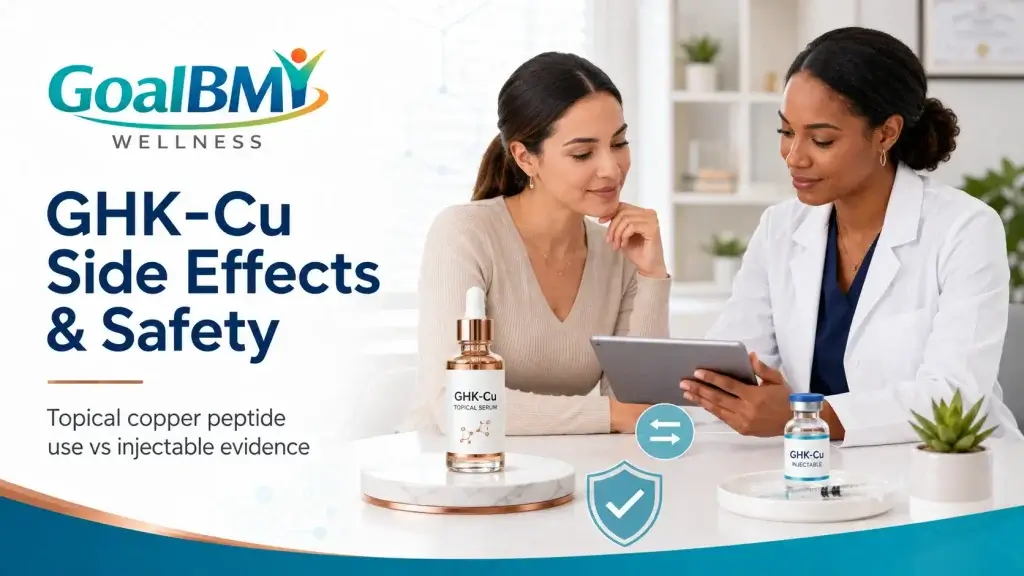
GHK-Cu Side Effects: What You May Notice and When to Get Help
GHK-Cu side effects depend on how you use it. Topical copper-peptide products may irritate the skin or cause redness, dryness, itching, stinging, or breakouts. Injectable GHK-Cu has much less human safety data, so new or persistent symptoms should be discussed with a provider rather than assumed to be a normal part of treatment.
Quick answer: With topical GHK-Cu, the main things to watch for are skin irritation and breakouts. With injectable GHK-Cu, you may also have an injection-site reaction. Because reliable human data are limited for injections, contact your provider if symptoms are persistent, worsening, severe, or unusual for you.
Important: There is no FDA-approved GHK-Cu drug product for skin rejuvenation, hair growth, recovery, anti-aging, or general wellness. Human safety information is especially limited for injectable GHK-Cu.
What GHK-Cu Side Effects Might I Notice?
Most people want a simple answer: what might I feel or see, and when should I worry? The answer depends mainly on whether GHK-Cu is being used on the skin or injected.
Redness, Stinging or Itching
Topical products may irritate sensitive skin or cause burning, itching, or visible redness.
Dryness or Rough Texture
Your skin may feel dry, tight, flaky, or rough after adding a new copper-peptide product.
Breakouts
Some people report acne-like bumps or worsening texture. That does not prove GHK-Cu causes a required “purging” phase.
Injection-Site Reactions
Redness, tenderness, bruising, itching, or swelling can happen around an injection site.
Also seeing headache, fatigue, nausea, dizziness, or another new symptom? These symptoms are often discussed online, but controlled human evidence has not established them as common injectable GHK-Cu side effects. If they continue or feel significant, tell your provider.
Topical and Injectable GHK-Cu Do Not Have the Same Safety Picture
Topical GHK-Cu has more cosmetic-use history and mainly raises questions about skin tolerance. Injectable GHK-Cu has much less human safety information and adds concerns related to formulation, sterility, aggregation, impurities, and possible immune reactions.
What About “Copper Uglies,” Acne or Purging?
“Copper uglies” is an informal online term for skin that looks rougher, drier, more irritated, or more broken out after starting a copper-peptide product. It is not a medically established stage everyone needs to push through.
The same is true for “purging.” There is no established evidence showing that GHK-Cu must cause a beneficial breakout before improvement. The reaction may also come from another ingredient in the serum or cream, or from another skincare product you are using.

When Should You Contact Your Provider?
You do not need to diagnose the cause yourself. If something is getting worse, lasting longer than expected, or feels unusual for you, contact your provider and describe what changed.
| What you notice | What to do |
|---|---|
| Skin redness, burning, itching, dryness, or breakouts that persist or worsen | Contact your provider or dermatologist instead of assuming it is a “purge.” |
| Injection-site warmth, swelling, drainage, or increasing pain | Contact your provider promptly. |
| Persistent headache, dizziness, nausea, fatigue, or another unexpected symptom | Tell your provider so the symptom and treatment plan can be reviewed in context. |
| Hives, facial or throat swelling, trouble breathing or swallowing, fainting, or rapidly worsening severe symptoms | Seek emergency care — call 911. |
What Should I Tell My Provider Before Using GHK-Cu?
A short, complete health review is more useful than trying to memorize every possible interaction. Make sure your provider knows about the following:
Sensitive or Reactive Skin
Share your current skincare products and any recent procedures, especially if your skin already reacts easily.
Wilson Disease or Copper Problems
Copper-processing disorders, abnormal copper testing, or relevant liver disease deserve direct medical review.
Pregnancy or Breastfeeding
Adequate therapeutic safety information is not available for these situations.
Medications, Supplements or Other Peptides
Bring the full list so your provider can review overlapping symptoms, skincare irritation, and treatment changes.
For injectable products, sourcing matters too. Unknown “research use only” products can raise questions about identity, concentration, purity, sterility, storage, and what is actually in the vial.
What Happens During a GoalBMI Consultation?
Tell Us What You Want to Improve
We start with your goal, such as skin, hair, recovery, or another specific concern.
Review Your Health and Current Treatments
Your provider reviews health conditions, medications, supplements, allergies, skincare, other peptides, and copper-related concerns.
Talk Through the Evidence and Options
We explain the difference between topical and injectable safety information and whether another option may fit your goal better.
Make a Plan If Treatment Is Appropriate
Your provider explains the formulation, sourcing, follow-up, and which symptoms should prompt a call.
Common Questions About GHK-Cu Side Effects
What are the most common GHK-Cu side effects?
There is no reliable frequency table across all routes. Topical products may cause redness, stinging, itching, dryness, sensitivity, or breakouts. Injectable GHK-Cu has much less human safety data.
Does GHK-Cu cause skin purging?
A predictable GHK-Cu purging phase has not been established. If your skin keeps getting worse, do not assume that means the product is working.
Can injectable GHK-Cu cause headache, fatigue, or nausea?
These symptoms are commonly mentioned online, but controlled human evidence has not established them as common injectable GHK-Cu adverse effects or provided reliable incidence rates.
Can GHK-Cu cause copper toxicity?
There is no controlled human dataset establishing a predictable copper-toxicity rate. People with Wilson disease, abnormal copper metabolism, abnormal copper testing, or relevant liver disease should discuss treatment with their clinician.
Can I use GHK-Cu with retinol or vitamin C?
There is no single rule for every formulation. Retinoids and acids can irritate the skin on their own, and product formulations vary. Follow the product instructions and your clinician’s or dermatologist’s advice.
How long do GHK-Cu side effects last?
There is no universal timeline. Persistent, worsening, or severe symptoms should be reviewed instead of managed according to an online schedule.
Is GHK-Cu FDA-approved?
No. There is no FDA-approved GHK-Cu drug product for therapeutic skin, hair, recovery, anti-aging, or general wellness use.
More GHK-Cu Guides

Still Have Questions About GHK-Cu?
Talk with a GoalBMI Wellness provider about your health history, current treatments, skin or hair goals, and whether GHK-Cu is appropriate for you.
Book Online Consultation Call GoalBMI Wellness





-
Monday – Friday:: 9:00 AM – 8:00 PMSaturday:: 9:00 AM – 4:00 PMSunday:: 12:00 PM – 8:00 PM
Real Patient Transformations