Why Have My Sermorelin Results Slowed Down?

Why Does Sermorelin Progress Sometimes Slow Down?
Many patients begin Sermorelin therapy expecting their progress to continue at the same pace every week. Early changes may feel more noticeable, while later improvements can become gradual or appear to level off.
That change can be discouraging, especially when sleep, workout recovery, daytime energy, or general wellness seemed to improve during the first several weeks.
However, slower progress does not automatically mean that Sermorelin has stopped having an effect. Improvements may become harder to recognize once they feel normal, while changes in sleep, stress, nutrition, exercise, treatment consistency, medications, or overall health may influence how results are perceived.
A Sermorelin plateau should be treated as information to review with your healthcare provider — not as a reason to independently increase the dose, change the injection schedule, or stop treatment.
Why Sermorelin Results May Feel Less Noticeable
A perceived plateau may involve more than one factor, and the explanation is not always related to the peptide itself.
At GoalBMI Wellness, a follow-up discussion begins by defining what the patient originally meant by “results.” One person may have started treatment hoping to sleep more consistently, while another may have been focused on exercise recovery, daytime energy, physical performance, or general wellness.
That distinction matters because different outcomes may change at different rates. Sleep may improve before recovery does, while exercise recovery may remain better even when the patient sees little change elsewhere.
A genuine improvement may also become less noticeable once it becomes part of a normal routine. Someone who wakes less often during the night may stop thinking about that improvement after several weeks, even though the change has not disappeared.
Improvements Became Familiar
Better sleep, steadier energy, or easier recovery may feel less dramatic once those improvements become part of your normal routine.
You Are Tracking Only One Outcome
Focusing only on sleep may cause you to overlook changes in recovery, energy, or overall wellness.
Your Treatment Routine Changed
Travel, missed or delayed doses, schedule disruptions, or inconsistent use may affect the progress being reviewed.
Sleep or Stress Changed
Reduced sleep, greater stress, illness, or changes in daily routine may influence energy, recovery, and overall well-being.
Nutrition or Hydration Changed
Lower protein intake, dehydration, or irregular meals may affect energy and recovery.
Your Health Situation Changed
New symptoms, medications, supplements, or medical conditions may require an individualized clinical review.
Sermorelin Progress Is Not Always Linear
A slower week or month does not automatically mean that treatment has stopped working.
One of the most common expectations patients bring to peptide therapy is that every goal should improve at the same pace. In reality, sleep, exercise recovery, daytime energy, and general wellness may all change on different timelines.
A patient may notice more restful sleep before seeing a meaningful change in recovery. Another person may feel steadier energy while seeing little change in how quickly they bounce back from a workout. These differences can make progress feel inconsistent even when a meaningful change may still be present.
Day-to-day changes can also be influenced by stress, hydration, activity, sleep duration, travel, illness, and normal fluctuations in how a person feels. One difficult week should not be used to judge the entire treatment response.
Early Changes
Improvements may stand out more during the first weeks because they are new and the patient is watching them closely.
Ongoing Progress
Once better sleep, energy, or recovery becomes normal, the same improvement may feel less dramatic.
Provider Review
A plateau is a useful time to review symptoms, goals, adherence, lifestyle changes, and the treatment timeline.
A Simple Sermorelin Progress Timeline
This illustration shows how early treatment, developing changes, a possible plateau, provider review, and adjusted expectations may fit together.
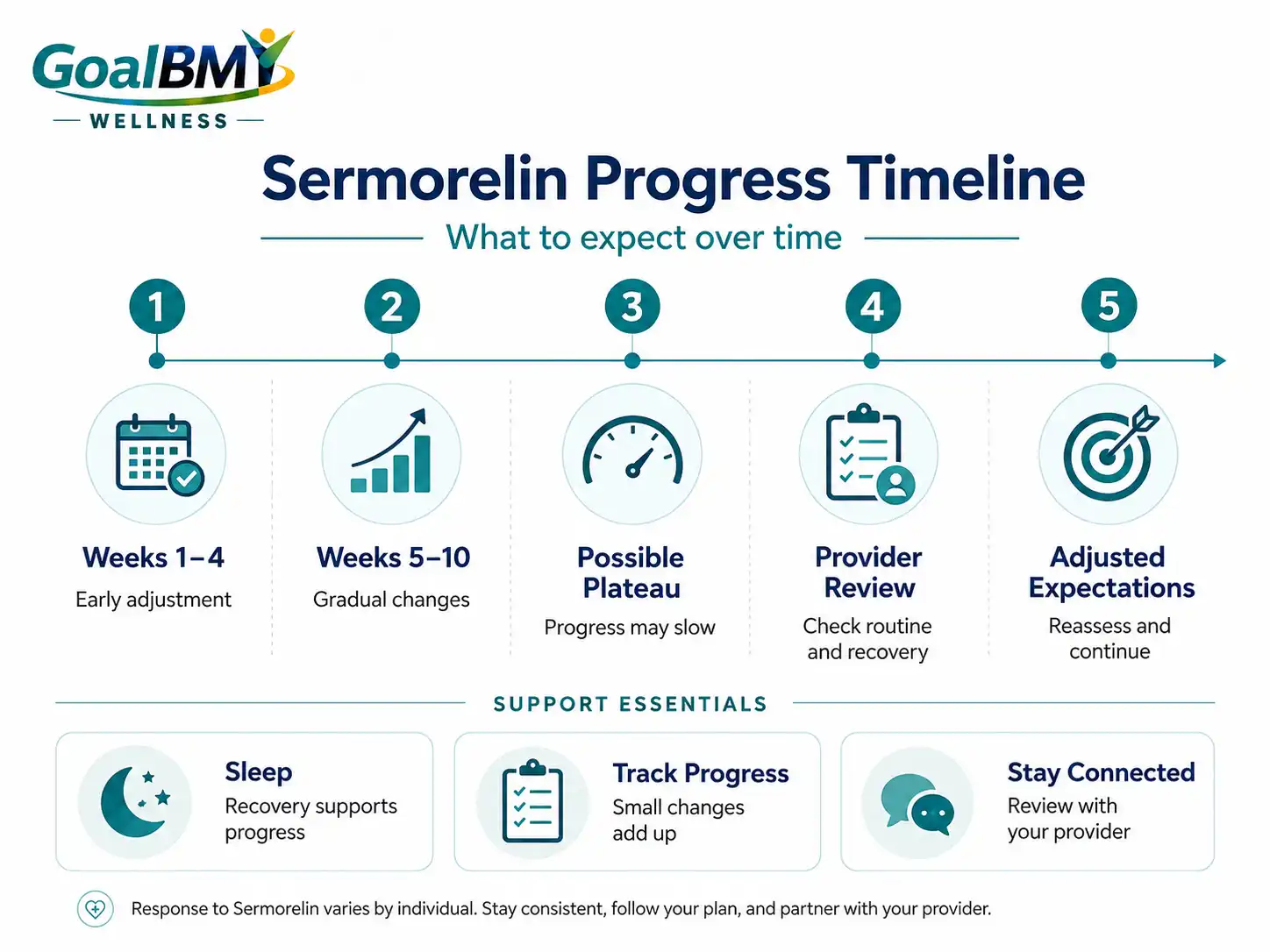
How Progress May Change Over Time
The stages below are broad educational examples rather than a guaranteed treatment sequence.
Weeks 1-4: Establishing a Baseline
The early period is often used to observe treatment tolerance, follow the prescribed schedule, and identify the outcomes that will be monitored.
Patients may track sleep, exercise recovery, daytime energy, or another goal discussed with the provider.
Weeks 5-10: Changes May Become Easier to Recognize
Some patients may begin noticing subtle differences, while others may require more time or may not experience the changes they expected.
The most useful approach is to document trends rather than compare one day with the next.
A Plateau: Progress Feels Less Noticeable
Earlier improvements may stabilize, become familiar, or be affected by sleep, stress, nutrition, exercise, or a change in overall health.
A plateau should not automatically be interpreted as treatment failure.
Provider Review: Look at the Complete Picture
The provider may review the original goals, treatment adherence, symptoms, lifestyle changes, medications, side effects, and the amount of time treatment has been followed.
The discussion is broader than deciding whether the dose should change.
Adjusted Expectations or Next Steps
The provider may recommend continuing the current plan, monitoring for additional time, changing how progress is measured, or completing further evaluation when clinically appropriate.
Any treatment adjustment should be individualized.
What Do Sermorelin Results Actually Mean?
The word “results” can describe several different outcomes, depending on why treatment was started.
Some patients focus on sleep or exercise recovery, while others pay more attention to daytime energy, body composition, or general wellness. A plateau in one area does not necessarily mean that every outcome has stopped changing.
Before deciding that progress has ended, identify the specific goal you were monitoring and consider whether improvements may still be present in another part of your routine.
Sleep Quality
Consider sleep duration, nighttime awakenings, morning fatigue, and whether you feel more rested after waking.
Exercise Recovery
Review soreness, recovery time, workout consistency, and readiness for the next activity session.
Daytime Energy
Track fatigue patterns, afternoon energy, motivation, and your ability to complete normal daily activities.
Body Composition
Waist measurements, clothing fit, strength, and other body-composition trends may provide more context than weight alone.
Physical Performance
Strength, endurance, activity consistency, and recovery may change at a different pace than other goals.
General Wellness
Overall energy, routine consistency, sleep, recovery, and how you feel during daily activities may all be relevant.
How to Track Sermorelin Progress More Accurately
A simple written record can make it easier to recognize gradual changes and have a more useful follow-up conversation.
It can be difficult to judge progress by memory alone. Sleep, energy, exercise recovery, and other wellness-related changes may develop gradually, making them easy to overlook once they become part of a normal routine.
Instead of relying only on how you feel on the day of an appointment, choose a small number of measurements connected to your original treatment goals. Record them consistently and review the overall trend with your provider.
Sleep
Note sleep duration, nighttime awakenings, morning fatigue, and whether you feel rested after waking.
Exercise Recovery
Track muscle soreness, recovery time, workout consistency, and readiness for the next activity session.
Daytime Energy
Use a simple one-to-ten scale to record fatigue, afternoon energy, motivation, and normal daily activity.
Body Measurements
When relevant, record waist measurements, clothing fit, weight, strength, or other measurements recommended by your provider.
Treatment Consistency
Document whether treatment was followed as prescribed and note any missed, delayed, or interrupted doses.
Symptoms and Side Effects
Record injection-site reactions, headaches, or any other new or worsening symptoms.
What a Simple Progress Log Can Look Like
A written log does not need to be complicated. This example shows how a few consistent measurements, tracked weekly, can reveal trends that are easy to miss day to day.
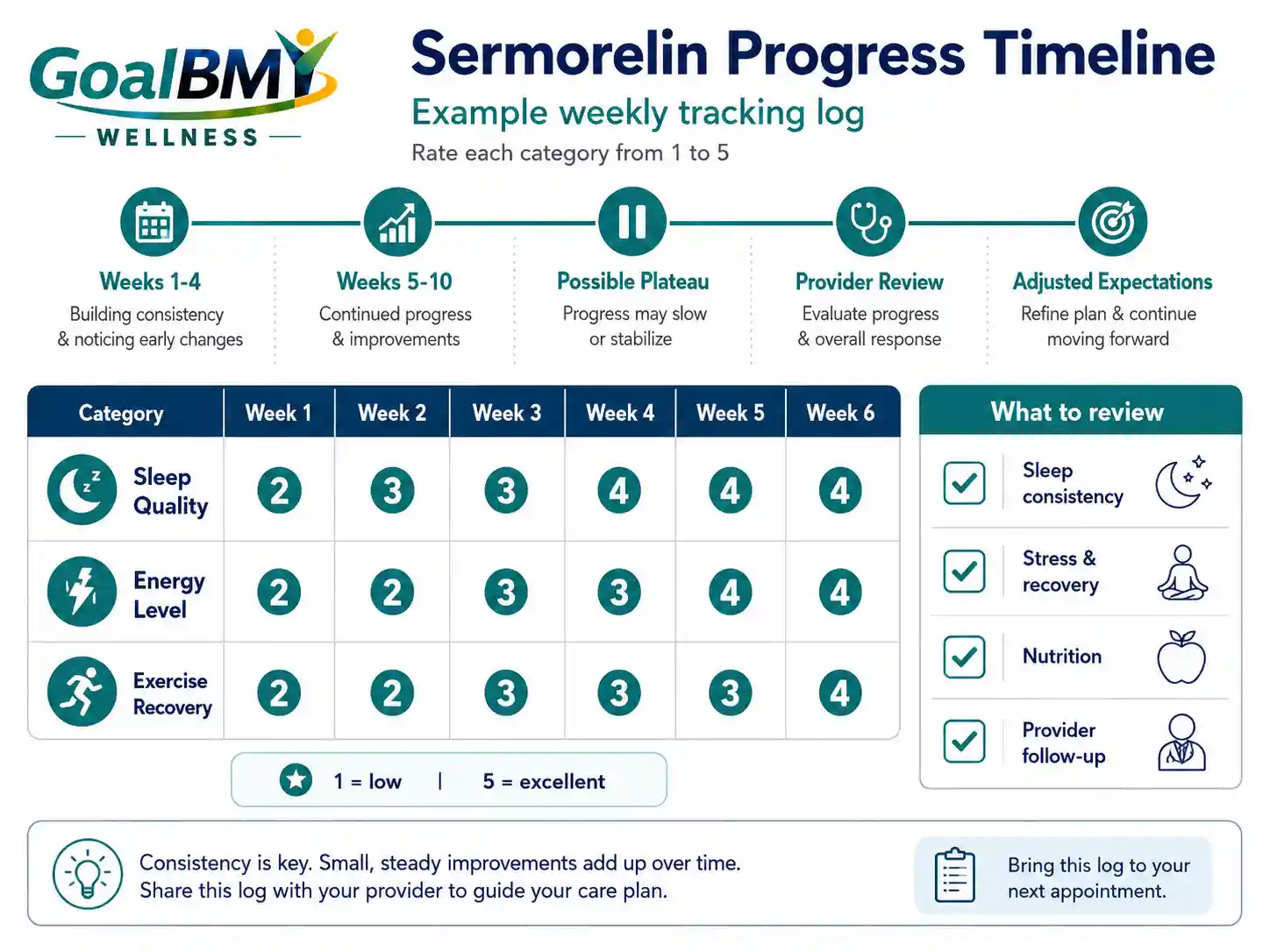
A Simple Way to Monitor Your Progress
Tracking should make your follow-up easier — not become another source of stress.
Choose Three to Five Relevant Measurements
Select the outcomes most closely connected to why treatment was started — sleep quality, exercise recovery, daytime energy, or treatment tolerance.
Record Them on a Consistent Schedule
Some measurements may be recorded daily, while others are more useful weekly. Use the same method each time whenever possible.
Look for Trends, Not One-Day Changes
A poor night of sleep or a difficult workout does not define the overall treatment response.
Bring Your Notes to Follow-Up
A written record helps your provider compare current progress with the original goals.
Sermorelin Progress Review Checklist
This table can help organize the information you may want to discuss during a provider appointment.
| Area to Review | What to Track | What to Discuss |
|---|---|---|
| Sleep | Duration, nighttime awakenings, morning fatigue, and sleep consistency | Whether sleep improved initially and whether that change has remained stable |
| Energy | Daytime fatigue, afternoon energy, motivation, and daily activity | Whether changes are consistent or affected by stress, sleep, or routine |
| Exercise Recovery | Muscle soreness, recovery time, workout frequency, and performance | Whether recovery has improved, slowed, or remained unchanged |
| Treatment Consistency | Missed doses, delayed doses, or schedule changes | Whether inconsistent use may be affecting the treatment review |
| Nutrition and Hydration | Protein intake, hydration, meal consistency, and dietary changes | Whether nutrition may be affecting energy or recovery |
| Stress and Sleep Disruption | Work stress, personal stress, travel, illness, and routine changes | Whether a stressful period coincided with the perceived plateau |
| Symptoms or Side Effects | Injection-site reactions, headaches, or other new symptoms | Whether symptoms require monitoring, evaluation, or a treatment change |
| Medications and Supplements | Newly started medications, supplements, or changes in existing prescriptions | Whether another treatment or health change may be relevant |
| Original Goals | The reason treatment was started and the outcome you expected | Whether the original goal remains appropriate, realistic, and measurable |
Educational tool only: This checklist does not diagnose a problem or determine whether a dosage adjustment is appropriate. Treatment decisions should be made by the licensed healthcare provider managing your care.
What to Review With Your Provider
A follow-up appointment should examine the complete treatment picture rather than focus only on whether the dose should change.
Your provider may review the original treatment goals, the prescribed schedule, treatment consistency, current symptoms, lifestyle changes, medications, supplements, side effects, and the amount of time the plan has been followed.
The discussion may also include whether the outcomes being monitored are still appropriate. A patient who originally focused on sleep may now be more concerned about recovery, while someone focused on energy may have changed their exercise routine or activity level.
Treatment History
Review when treatment started, how consistently it has been followed, and whether there have been interruptions.
Current Goals
Clarify which outcomes matter most now and whether they are the same goals that were identified at the start.
Lifestyle Changes
Discuss changes in sleep, stress, nutrition, hydration, activity, travel, illness, and daily routine.
Symptoms and Tolerance
Report new symptoms, side effects, injection-site reactions, or changes in how treatment is tolerated.
Common Mistakes During a Sermorelin Plateau
A slower period can be frustrating, but reacting too quickly may make it harder to understand what is actually happening.
When progress feels less noticeable, some patients begin looking for an immediate solution. They may focus on the dose, compare their experience with someone else, or judge the entire treatment plan based on one difficult week.
A better approach is to step back, review the complete pattern, and discuss any concerns with the prescribing provider before changing treatment.
Increasing the Dose Independently
Never increase your prescribed dose or injection frequency without speaking with your healthcare provider.
Judging Progress by One Week
A poor night of sleep or one difficult workout does not define the overall treatment response.
Looking Only at One Measure
Sleep, recovery, energy, and general well-being may provide additional context beyond your primary focus.
Ignoring Lifestyle Changes
Poor sleep, dehydration, increased stress, illness, travel, or reduced activity may affect how progress feels.
Comparing Your Timeline With Another Patient
Health history, goals, treatment plans, and individual response differ from person to person.
Stopping Treatment Without Guidance
Speak with the prescribing provider before stopping, pausing, or changing a treatment plan.
What to Do When Progress Feels Slower
A plateau is usually a reason to review the plan carefully, not a reason to make aggressive changes on your own.
Review the Original Goal
Clarify why treatment was started and which outcome mattered most at the beginning.
Look at Several Weeks of Information
Review trends in sleep, recovery, energy, and symptoms instead of focusing on one day.
Check Treatment Consistency
Note missed or delayed doses, travel, or schedule interruptions.
Review Sleep, Stress, Nutrition, and Activity
Changes in daily routine may influence how treatment-related progress is perceived.
Document New Symptoms
Write down new or worsening symptoms to discuss with the provider.
Schedule a Provider Review
A licensed provider can review the complete picture and determine next steps.
When Should You Contact Your Provider?
You do not need to wait until progress has completely stopped meeting your expectations before requesting a follow-up.
Contact your provider whenever you are uncertain about your response, notice new symptoms, experience side effects, or begin considering a change to the prescribed treatment plan.
Progress Feels Different
Earlier improvements have become less noticeable, or the outcomes you are monitoring have changed.
New Symptoms Appear
Report new or worsening symptoms rather than waiting for the next routine visit.
You Are Considering a Treatment Change
Speak with the provider before changing the dose, schedule, or treatment duration.
Sermorelin Plateau FAQ
These answers address common questions patients may have when Sermorelin progress becomes less noticeable. Questions about your individual response or treatment plan should be reviewed with your prescribing healthcare provider.
Why do Sermorelin results seem to stop after a few weeks?
Can your body become resistant to Sermorelin?
Should I increase my Sermorelin dose during a plateau?
Is it normal for Sermorelin progress to slow over time?
Should I stop Sermorelin if I am no longer seeing the same results?
When should I contact my provider about a plateau?
Questions About Your Sermorelin Progress?
If your results feel different than expected, a licensed New York provider can review your treatment history, current symptoms, progress measurements, goals, and prescribed plan. A follow-up can help determine whether the current approach should continue or whether additional evaluation may be appropriate.
Schedule a Consultation




-
Monday – Friday:: 9:00 AM – 8:00 PMSaturday:: 9:00 AM – 4:00 PMSunday:: 12:00 PM – 8:00 PM
Real Patient Transformations