Wolverine Blend Before and After: BPC-157 + TB-500 Results, Recovery & What to Expect

Wolverine Blend Before and After: What Results Can You Really Measure?
Wolverine Blend before and after is better measured by changes in symptoms, movement, function, and recovery goals than by dramatic photos or a fixed week-by-week promise. Wolverine Blend combines BPC-157 and TB-500. Human evidence for the combination remains limited, and there is no validated human timeline showing that everyone should feel or function better by a specific week. A 2026 exploratory rat Achilles-tendon study tested BPC-157, TB-500, and the combination, but animal results cannot be used as a guaranteed human recovery timeline.
Quick answer: There is no reliable human “week 1, week 4, week 8” Wolverine Blend results timeline. Some people describe less stiffness, easier movement, reduced discomfort, or feeling better able to return to activity, but those experiences are not the same as proof that BPC-157 + TB-500 caused tissue healing. At GoalBMI Wellness, the more useful before-and-after comparison is your own baseline versus follow-up: what hurt, what you could not do, what changed, what stayed the same, and whether the overall plan still makes sense.
Research status: BPC-157 and TB-500 are not FDA-approved medications. Current evidence for Wolverine Blend is mostly preclinical, and no controlled human trial has established the blend’s effectiveness, a reliable results timeline, or long-term outcomes.
What Does “Wolverine Blend Before and After” Really Mean?
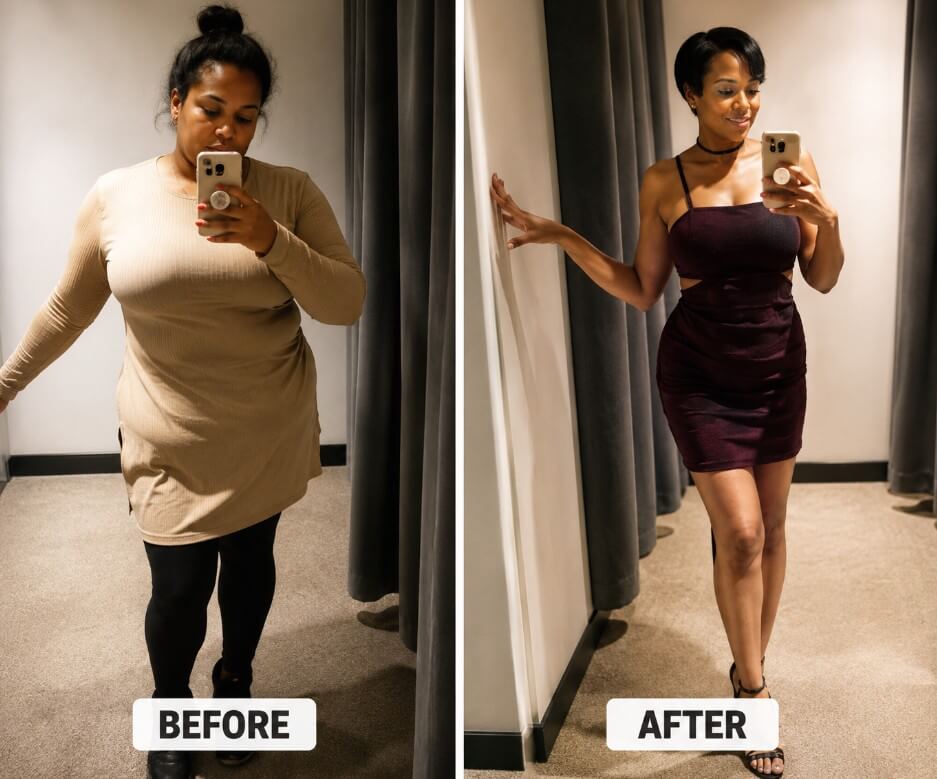
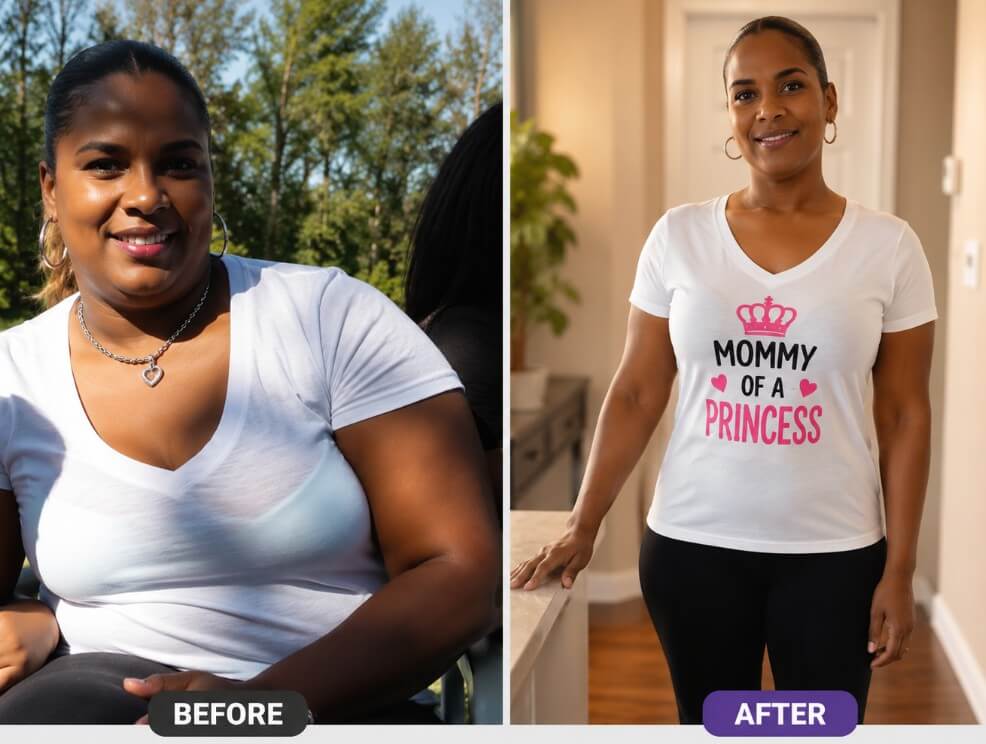
Before-and-after content usually makes people think of a visible transformation. That works for some cosmetic treatments or body-composition programs because the outcome can sometimes be seen in a photograph. Recovery is different.
A tendon, ligament, muscle, or irritated joint does not become reliably “proven healed” because a picture looks different. Even when someone feels less discomfort, that does not automatically tell us what changed inside the tissue or which part of a recovery plan caused the improvement.
For Wolverine Blend, a more useful before-and-after question is: Are you moving better, functioning better, tolerating activity better, and making meaningful progress toward the reason you started?
What to Record Before Starting Wolverine Blend
If you want to know whether anything changed, you need something honest to compare it with. Your provider may focus on practical baseline information rather than a dramatic “before” photo.
Symptoms
Where is the discomfort, stiffness, soreness, or limitation? What makes it better or worse?
Movement
Can you bend, reach, walk, squat, lift, climb stairs, or move through the range you need?
Function
What activity are you currently avoiding or modifying because of the problem?
Recovery Pattern
How do you feel later that day or the next day after exercise, work, or rehabilitation?
Other Treatment
Physical therapy, rest, medications, injections, supplements, surgery, or other care can affect the same outcome.
Your Goal
Define what “better” means for you: easier daily movement, return to training, improved mobility, or another realistic goal.
What Do People Report After Starting Wolverine Blend?
Some people using Wolverine Blend describe less stiffness, easier movement, less discomfort with activity, or feeling like recovery is moving in the right direction. Those reports are worth listening to because they describe what patients care about in everyday life.
But we need to label them correctly. These are reported experiences, not established response rates and not proof that every change was caused by Wolverine Blend.
How we talk about this at GoalBMI: “Some people report” means exactly that. It does not mean a controlled trial proved the same result, that everyone should expect it, or that we know how often it happens.

Is There a Reliable Wolverine Blend Results Timeline?
No validated human timeline tells us that Wolverine Blend should produce a particular result in week 1, week 2, week 4, or week 8. You will see those timelines online, but they are usually based on clinic experience, patient reports, marketing, or extrapolation from preclinical research rather than a controlled human Wolverine Blend trial.
That does not mean nobody notices changes during treatment. It means we should not turn anecdotal timing into a medical promise.
| What you may see online | How GoalBMI frames it |
|---|---|
| “You should feel results in 1–2 weeks.” | Some people report early changes, but there is no validated human timeline that applies to everyone. |
| “Major healing happens by week 4.” | A treatment week is not proof of structural healing. Recovery depends on the tissue, injury, rehabilitation, and many other factors. |
| “The combination works better than either peptide alone.” | A 2026 rat study did not show an added benefit from combining BPC-157 and TB-500 compared with the individual agents. |
| “Before-and-after photos prove it worked.” | Photos cannot reliably show tendon, ligament, collagen, or internal tissue quality. |
What Does the Research Show About Before-and-After Change?
2026 BPC-157 + TB-500 combination study
A 2026 exploratory study used a repaired Achilles-tendon model in 32 rats and compared four groups: control, BPC-157, TB-500, and BPC-157 + TB-500. At four weeks, researchers measured tendon strength and tissue characteristics. Some repair-related measures improved in treatment groups, particularly with TB-500, but the combination did not provide additional benefit compared with the individual agents.
This gives us a real controlled “before versus study endpoint” experiment for the combination — but it is still a rat study. It does not establish what a person should feel by week four, what a human MRI should show, or whether the same outcomes occur in patients.
Human BPC-157 evidence is still limited
One small retrospective human report looked at intra-articular BPC-157 for knee pain. Follow-up relied on patient-reported pain and did not use standardized tools for function, quality of life, stiffness, or activities of daily living. A separate small intravenous pilot focused on short-term safety rather than tissue-healing outcomes.
Human Wolverine Blend evidence is still missing
No controlled human trial has established a Wolverine Blend before-and-after recovery timeline. That is why the honest approach is to track your own clinical goals without pretending that an animal study, a testimonial, or someone else’s timeline predicts your result.
How GoalBMI Can Measure Progress During Therapy
Provider follow-up gives the phrase “before and after” more meaning. Instead of relying on memory alone, the goal is to compare the same practical questions over time.
Is discomfort, stiffness, or soreness changing?
Are you moving through more useful range?
Can you do more of the activity you care about?
How are you responding after activity or rehabilitation?
Any injection-site or new symptoms that need review?
Is the plan helping enough to justify continuing it?
Why One Person’s Before and After May Look Different From Another’s
Even if two people start the same peptide combination, they are not starting with the same body, injury, rehabilitation plan, medications, or recovery environment.
What You Are Recovering From
An acute strain, chronic tendon problem, post-procedure recovery, and long-standing joint issue are not the same situation.
Severity & Duration
A recent mild problem may behave differently from an issue that has been present for months or years.
Rehabilitation
Physical therapy, progressive loading, rest, and return-to-activity decisions can strongly affect function and recovery.
Sleep & Nutrition
Recovery is influenced by adequate sleep, nutrition, protein intake, and overall health—not one intervention alone.
Other Treatments
Medications, supplements, injections, surgery, or other therapies can make cause-and-effect harder to separate.
Individual Response
Human response varies. A result another person reports online is not a forecast of your own outcome.
Where the Peptide Comes From Matters
Before-and-after claims are even harder to interpret when the product itself comes from an unknown source. Products sold through unverified research websites can raise questions about concentration, purity, sterility, storage, and what is actually in the vial.
Working with a licensed healthcare provider and an appropriate pharmacy helps reduce risks associated with unknown sourcing and questionable product quality. It does not eliminate every risk, and it does not turn limited evidence into guaranteed results.
How Long Do Wolverine Blend Results Last?
We do not have controlled human data that establishes how long Wolverine Blend results last after treatment stops. Online articles sometimes give ranges measured in weeks or months, but those ranges should not be presented as established clinical evidence.
If you improve, the next question is whether that improvement holds as activity changes, rehabilitation progresses, or treatment is adjusted. That is another reason follow-up matters. A provider can look at whether the original goal was reached, whether progress is stable, whether symptoms return, and whether continuing treatment still makes sense.
The absence of long-term data does not automatically mean benefit cannot last. It means durability has not been established well enough to promise a specific timeframe.
When to Contact Your Provider During Treatment
| What is happening | What to do |
|---|---|
| Your symptoms are worsening rather than improving | Contact your provider so the overall plan can be reviewed. |
| You are increasing activity but pain or function is getting worse | Discuss it with your provider and rehabilitation professional before pushing through. |
| Injection-site irritation is persistent, worsening, or unusual | Contact your provider. |
| You develop a new or unexpected symptom | Tell your provider so it can be evaluated in context. |
| Hives, facial or throat swelling, difficulty breathing, chest pain, or severe dizziness | Seek emergency care — call 911. |
A Before-and-After Goal Should Start With the Right Patient
You Have a Clear Recovery Goal
A specific functional goal gives you and your provider something meaningful to reassess rather than chasing a vague promise of “faster healing.”
You Have Active Cancer or a Significant History
Human safety data remain limited. This needs individualized medical review, and your provider may recommend specialist input depending on your history.
You Are Pregnant or Breastfeeding
Safety data are not established for these situations. Discuss safer alternatives directly with a qualified healthcare provider.
You Want Monitored, Sourced Access
Provider-guided care creates a baseline, reviews sourcing and medications, watches for side effects, and helps decide whether treatment remains appropriate.
None of these automatically mean Wolverine Blend is right or wrong for you. They are the kinds of factors a provider should review before deciding whether treatment is appropriate.
What Happens During a GoalBMI Consultation
Tell Us Your Goal
We start with what you want to be able to do differently—not with a promise that Wolverine Blend will produce a certain result.
Review Medical History & Medications
Your provider reviews health history, current medications, other treatment, and factors that may change the safety or eligibility picture.
Discuss Wolverine Blend, Current Evidence & Alternatives
We explain what BPC-157 and TB-500 research does and does not show, including the limits of before-and-after timelines.
Build an Individualized Plan If Appropriate
If treatment is appropriate, we establish what to monitor so your follow-up is based on your own baseline and response.
Wolverine Blend Before and After: Common Questions
What do Wolverine Blend before-and-after results look like?
For recovery-focused care, useful changes are usually functional rather than photographic: symptoms, range of motion, activity tolerance, recovery after activity, and progress toward a specific goal. There is no validated human Wolverine Blend transformation timeline.
How long does Wolverine Blend take to work?
There is no controlled human study establishing a reliable time-to-benefit for Wolverine Blend. Some people report changes during treatment, but online week-by-week timelines should not be treated as proven expectations.
Can I expect results in the first week?
Some clinics and users describe early changes, but there is not enough controlled human evidence to promise that a meaningful Wolverine Blend effect should appear in the first week.
Does Wolverine Blend heal tendons or ligaments?
Preclinical research is relevant to tissue repair, including a 2026 rat Achilles-tendon study of BPC-157, TB-500, and the combination. That research is interesting, but it does not establish tendon or ligament healing effectiveness in humans.
Is the BPC-157 + TB-500 combination better than either peptide alone?
That has not been established in humans. In the 2026 exploratory rat Achilles-tendon study, combining BPC-157 and TB-500 did not provide additional benefit compared with the individual agents.
Are Wolverine Blend before-and-after photos reliable?
Not for proving internal tissue repair. A photograph cannot reliably show collagen organization, tendon strength, ligament integrity, or which part of a recovery plan caused a change.
What should I track before starting Wolverine Blend?
Useful baseline information can include symptoms, movement, function, recovery after activity, rehabilitation, other treatments, and the specific activity or goal you want to improve.
How long do Wolverine Blend results last?
Controlled human data have not established how long any Wolverine Blend benefit lasts after treatment stops. Follow-up is useful for seeing whether progress is stable, returning, or changing as activity and rehabilitation evolve.
What if I do not notice improvement?
Tell your provider. A monitored plan should include reassessing whether treatment is helping enough, whether another issue needs evaluation, or whether a different approach makes more sense.
Is Wolverine Blend FDA-approved?
No. BPC-157 and TB-500 are not FDA-approved medications, and a licensed provider should review whether peptide therapy is appropriate for your situation.
More Wolverine Blend Resources

Interested in Wolverine Blend? Start With a Provider Conversation
A GoalBMI Wellness provider can review your health history, medications, recovery goals, current treatments, and concerns and help you understand whether Wolverine Blend—or another option—makes sense for you. If treatment is appropriate, your baseline and follow-up can be used to judge your own response rather than someone else’s before-and-after story.
Book Online Consultation Call GoalBMI Wellness






-
Monday – Friday:: 9:00 AM – 8:00 PMSaturday:: 9:00 AM – 4:00 PMSunday:: 12:00 PM – 8:00 PM
Real Patient Transformations