
Peptides and Pregnancy: What to Avoid Before, During & After Pregnancy

Pregnancy changes how medications are evaluated. Some weight-loss medications have specific pregnancy warnings, while many wellness peptides simply do not have enough human pregnancy data to establish safety.
Pregnancy is one of those times when we want patients to tell us about everything they are taking — prescriptions, compounded medications, peptides, supplements, and blends. If safety data are limited, we should not assume a product is safe simply because it is used for wellness.”
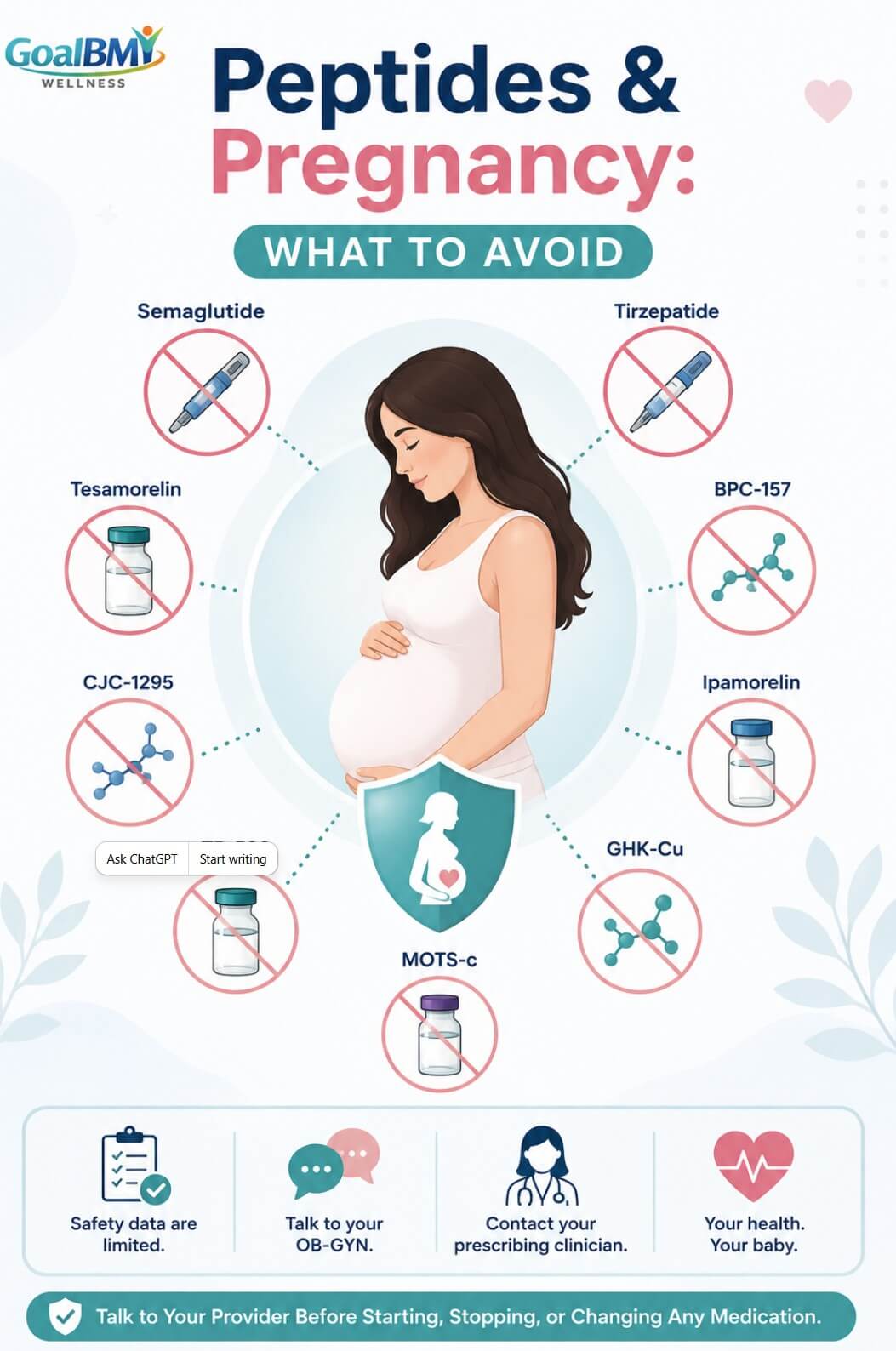
Popular Peptides and Pregnancy
The evidence is different for each medication. Some have specific pregnancy labeling; others simply do not have enough reliable human data to establish safety.
| Medication / Peptide | What We Know | Patient Takeaway |
|---|---|---|
| Semaglutide | Weight-loss treatment is not appropriate during pregnancy; planned pregnancy requires advance medication review. | Contact your provider if pregnant or planning pregnancy. |
| Tirzepatide | Current labeling warns of potential fetal harm and recommends discontinuation when pregnancy is recognized. | Do not use for intentional weight loss during pregnancy. |
| Tesamorelin | Pregnancy is a labeled contraindication. | Do not use during pregnancy. |
| Retatrutide | Investigational; pregnancy safety is not established. | Avoid elective use during pregnancy. |
| BPC-157 | FDA reports no or limited human safety information. | Pregnancy safety is not established. |
| CJC-1295 | Available clinical data are limited. | Avoid elective use during pregnancy. |
| Ipamorelin | FDA lacks sufficient safety information for certain injectable routes. | Pregnancy safety is not established. |
| TB-500 | FDA reports no identified human drug-product exposure data for the TB-500 fragment. | Avoid elective use during pregnancy. |
| GHK-Cu injections | Limited human safety information for injectable use. | Do not assume pregnancy safety. |
| MOTS-c | FDA reports no identified human exposure data for drug products containing MOTS-c. | Pregnancy safety is not established. |
| Sermorelin | Adequate pregnancy safety evidence for elective wellness use is lacking. | Do not self-treat; discuss with your provider. |
Semaglutide, Tirzepatide and Retatrutide During Pregnancy
Semaglutide and Pregnancy
Intentional weight loss is not recommended during pregnancy. Planned pregnancy should be discussed before conception because semaglutide remains in the body for weeks.
Tirzepatide and Pregnancy
Tirzepatide should be discontinued when pregnancy is recognized under current weight-management labeling. Patients using it for diabetes need a clinician-directed glucose-management plan.
Retatrutide and Pregnancy
Retatrutide remains investigational. Pregnancy is not an appropriate setting for experimenting with an unapproved weight-loss compound.
Compounded Weight-Loss Medication
Compounded does not mean pregnancy-safe. A compounded product should not be assumed safer than an FDA-approved medication.
Tesamorelin and Pregnancy
Pregnancy is a contraindication in FDA-approved tesamorelin labeling. For general treatment safety information, see the GoalBMI Wellness Tesamorelin Side Effects guide.
BPC-157, CJC-1295, Ipamorelin, TB-500, GHK-Cu and MOTS-c
For many wellness peptides, the evidence problem is not that pregnancy trials proved harm. It is that adequate human safety information does not exist. Lack of evidence of harm is not evidence of safety.
BPC-157
FDA reports no or limited safety-related information for proposed routes of administration.
CJC-1295
Clinical data are limited, and FDA has identified serious adverse events associated with CJC-1295.
Ipamorelin
FDA lacks sufficient safety information for certain injectable routes.
TB-500
FDA reports no identified human drug-product exposure data for the TB-500 fragment.
GHK-Cu
Injectable GHK-Cu has limited human safety information and should not be confused with topical cosmetic products.
MOTS-c
FDA reports no identified human exposure data for drug products containing MOTS-c.
The absence of pregnancy studies is not reassurance. When a peptide has limited human reproductive safety data, the safest approach is to review the exact product with the patient’s prescribing clinician and OB-GYN rather than relying on assumptions or online experience.”
Sermorelin and Pregnancy
Adequate pregnancy safety evidence for elective sermorelin wellness use is lacking. A lack of pregnancy data should not be interpreted as proof of safety.
GLOW, KLOW and Wolverine Blends During Pregnancy
Combination products create multiple exposures at once. If individual ingredients lack adequate pregnancy safety data, combining them does not make the blend better studied.
What If You Become Pregnant While Taking a Peptide?
An accidental exposure does not automatically mean harm occurred. Contact your OB-GYN and prescribing clinician, and provide the exact product, dose, concentration, and date of your last dose. Tell them if it was compounded or part of a peptide blend.
Are Compounded Peptides Safer During Pregnancy?
No. “Compounded” does not mean safer, gentler, or pregnancy-approved. Compounded products should not be assumed safer during pregnancy.

Planning Pregnancy While Using Peptides
Medication review is best done before conception. Different medications leave the body at different rates, so do not apply one drug’s stop-before-pregnancy timeline to another.
Peptides and Breastfeeding Are a Separate Question
Pregnancy and breastfeeding are different exposure situations. Whether a medication reaches breast milk and how much reaches the infant must be considered separately.
Peptides and Pregnancy FAQs
Can you take peptides while pregnant?
What if I took a peptide before I knew I was pregnant?
Is BPC-157 safe during pregnancy?
Is tesamorelin safe during pregnancy?
Are compounded peptides safer during pregnancy?
Can I use peptides while breastfeeding?
Pregnancy, Peptides, Birth Control & Trying to Conceive
Can peptides affect fertility or make it easier to get pregnant?
Can tirzepatide make birth control pills less effective?
What if I get pregnant while taking tirzepatide or semaglutide?
How long before trying to conceive should I stop a weight-loss medication?
Can I use BPC-157 while trying to conceive?
What about CJC-1295 or ipamorelin while trying to get pregnant?
Are peptide blends safer because the doses of each ingredient are smaller?
Can I restart peptides right after giving birth?
Can I take peptides while breastfeeding?
Are compounded peptides safer if my doctor prescribed them?
Peptide Therapy and Medication Information
Medical References
This article is based on current prescribing information and safety guidance from U.S. medical and regulatory sources. Pregnancy recommendations can change as new evidence becomes available, so patients should always review their specific medication with their OB-GYN and prescribing clinician.

Pregnant, Trying to Conceive, or Have Questions About Your Medication?
Talk with your OB-GYN and prescribing clinician before starting, stopping, or changing treatment. GoalBMI Wellness patients can also speak with a licensed provider about their current medications and treatment plan.
Contact GoalBMI Wellness




-
Monday – Friday:: 9:00 AM – 8:00 PMSaturday:: 9:00 AM – 4:00 PMSunday:: 12:00 PM – 8:00 PM